Work Permit Application Services in Singapore

Professional assistance with Work Permit applications for employers in Singapore
WORKPASS PTE LTD provides professional assistance to employers hiring eligible foreign workers under Singapore’s Work Permit (WP) scheme.
We assist employers with Work Permit eligibility checks, document preparation, online application submission, application monitoring, MOM correspondence and Work Permit issuance.
Our team supports employers across the approved Work Permit sectors, subject to the prevailing Ministry of Manpower (MOM) requirements.
We assist with Work Permit applications for:
- Construction, Manufacturing, Marine Shipyard, Process and Services sectors
Work Permit Application Fee
- Inclusive of MOM Work Permit application fee of S$35 and issuance fee of S$35
- Inclusive of security bond and medical insurance cost – Non-Malaysian workers
- Preparation and online filing of the Work Permit application
- Monitoring and tracking of the Work Permit application status while under processing
- Liaising with MOM officer, if required
- Responding to MOM requests for additional information, if any
- Arranging Work Permit issuance upon In-Principle Approval (IPA)
- Arranging Work Permit card registration and appointment, where required
- Coordinating Work Permit card delivery after registration
- Filing an appeal in case of rejection
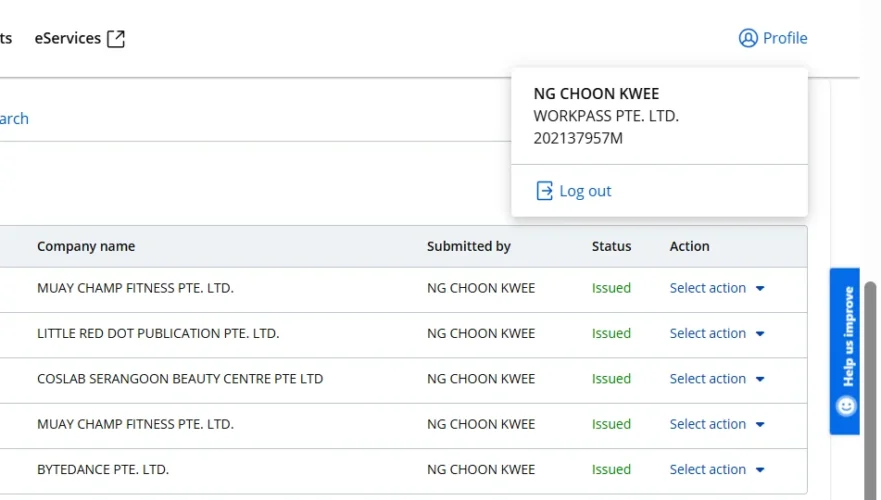
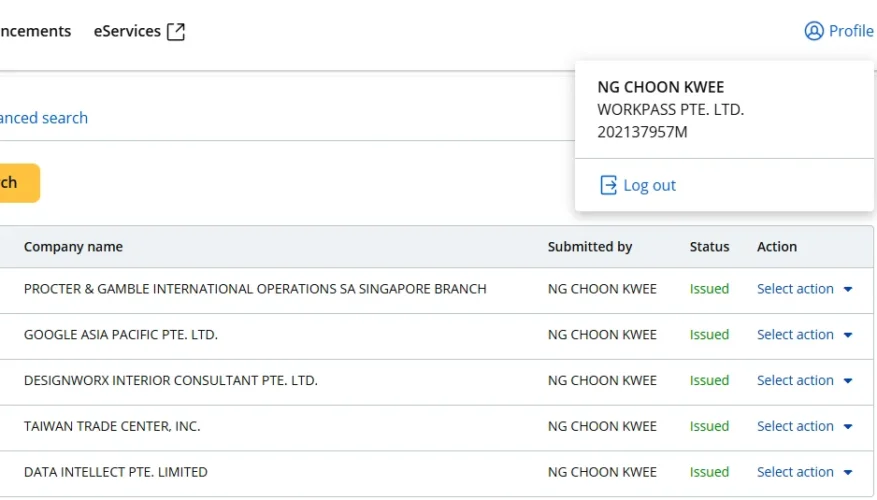
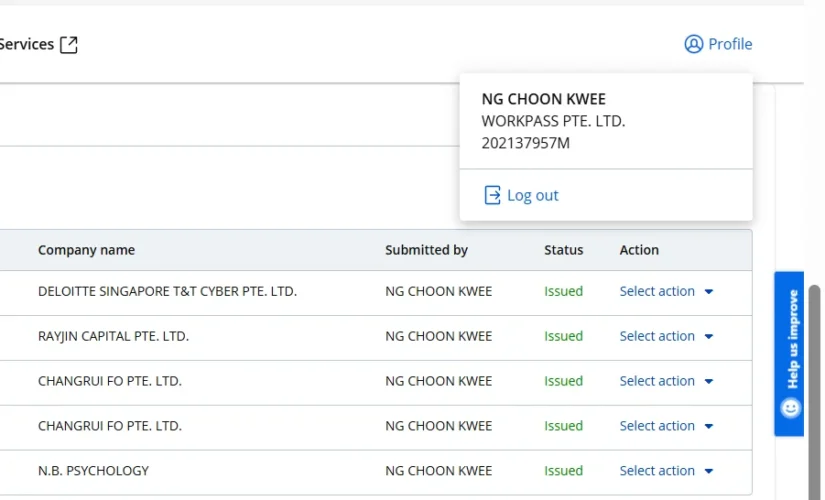
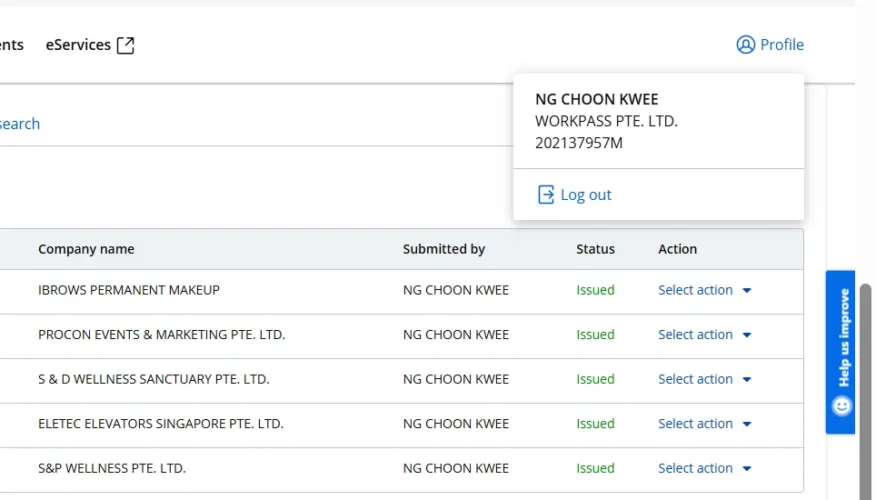
Our Client Portfolio
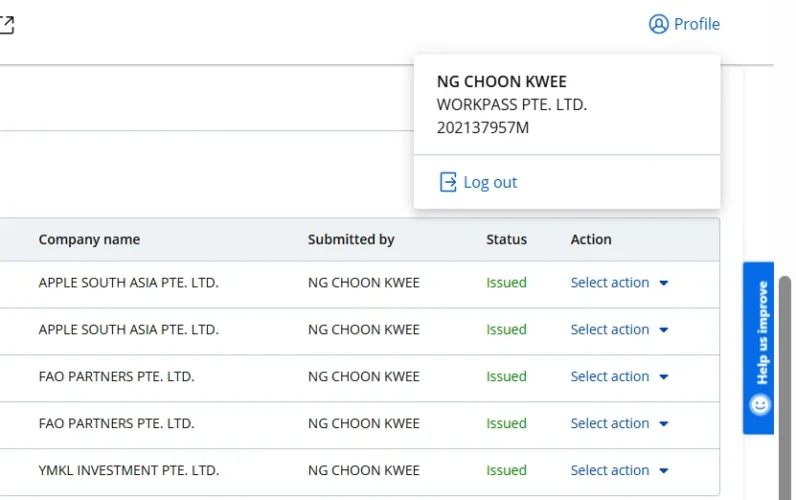
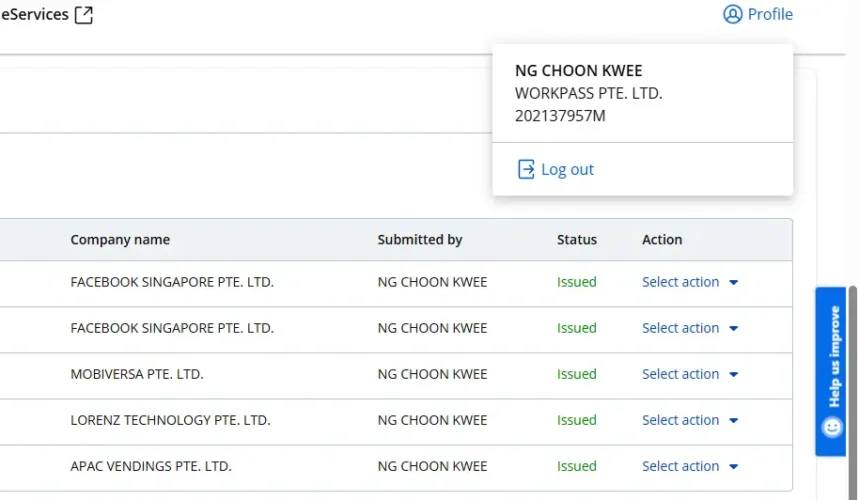
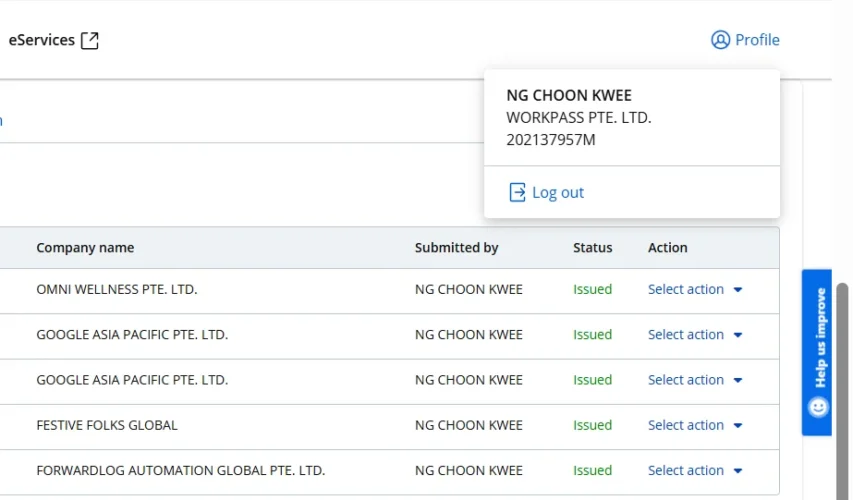
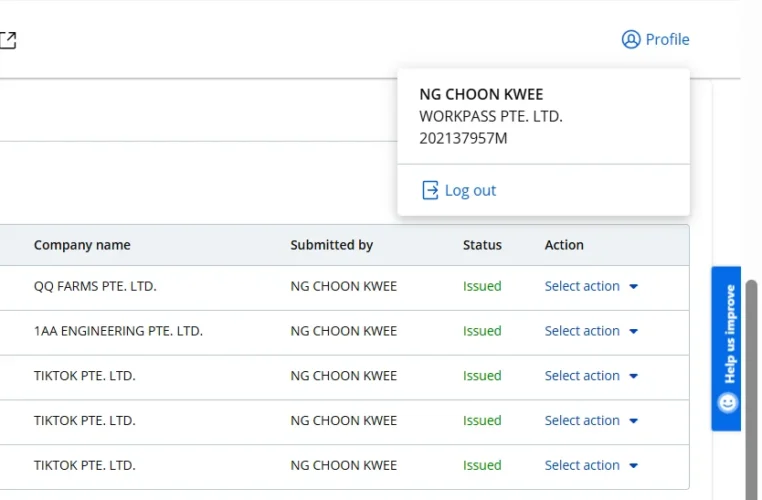
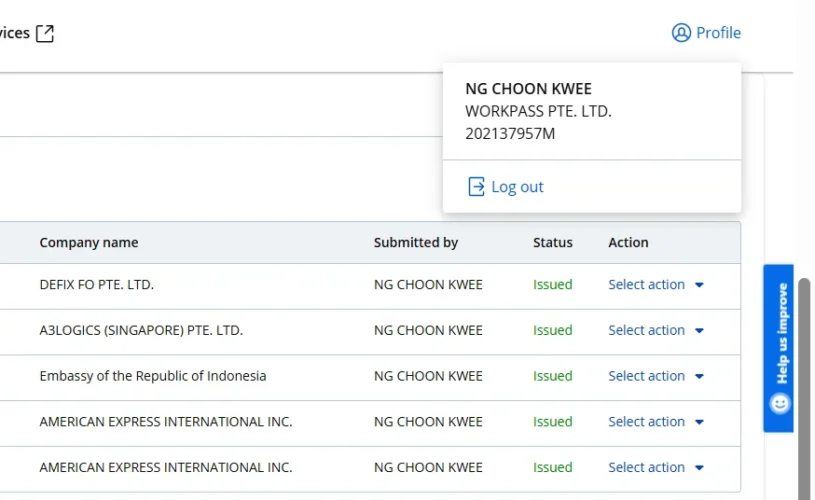
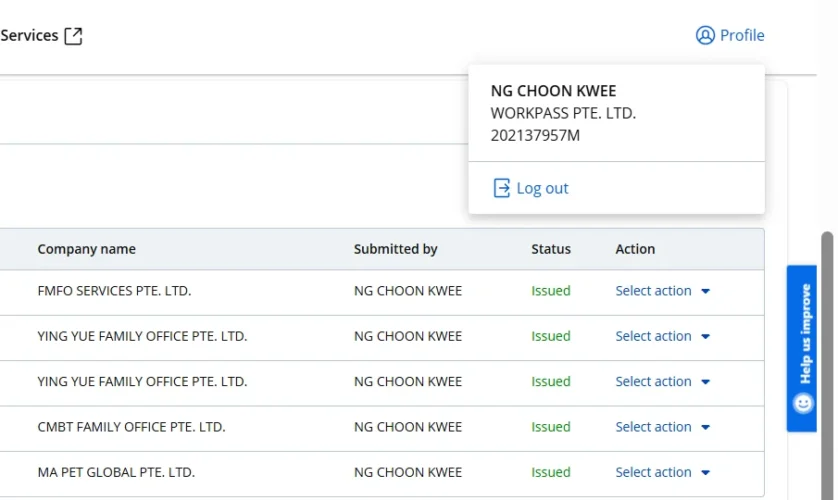
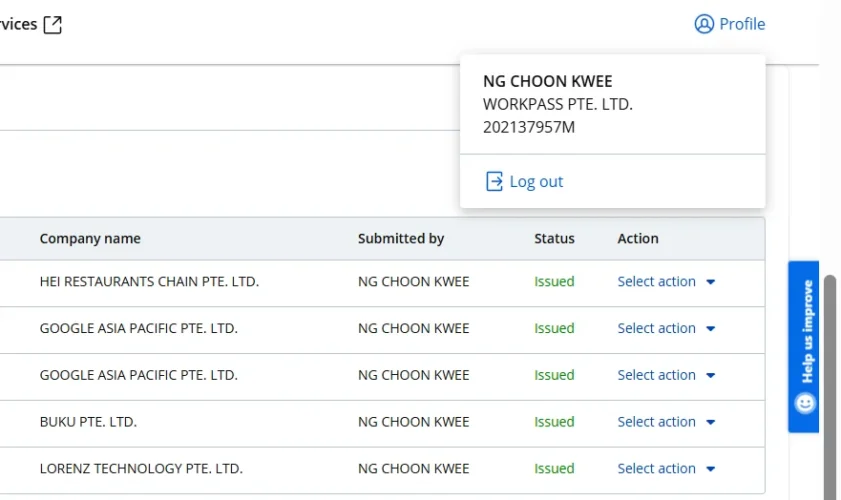
We support Singapore employers and businesses with Work Permit applications, providing practical, reliable guidance on eligibility, required documents and application submission.
Singapore Work Permit Application Guide
This guide provides a detailed overview of the Singapore Work Permit covering eligibility, the application process, and crucial tips for a successful outcome.
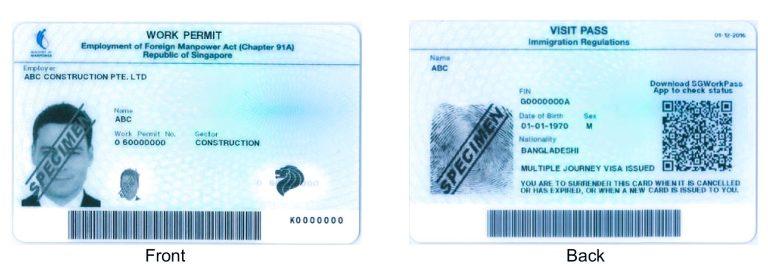
What is a Work Permit in Singapore?
The Work Permit (WP) is a work pass for eligible migrant workers from approved source countries or regions who are employed in approved sectors in Singapore.
Unlike the Employment Pass and S Pass, which are generally used for professional and mid-skilled employees, the Work Permit is mainly used for eligible migrant workers in operational and semi-skilled roles.
There is no general minimum qualifying salary for a Work Permit. However, employers must comply with the salary and employment conditions applicable to the worker and, where relevant, specific NTS occupation requirements.
Work Permit Eligibility Requirements
Both the employer and foreign worker must meet the applicable MOM requirements before a Work Permit application can be submitted.
Key considerations include:
- Approved source country or region
- Approved Work Permit sector
- Approved occupation, where applicable
- Worker age requirements
- Employer’s foreign worker quota
- Foreign worker levy
- Security bond requirements
- Medical insurance requirements
- Sector-specific licensing or approval requirements
- Other Work Permit conditions
Work Permit Age Requirement
For a new Work Permit application, the worker must:
- Be at least 18 years old
- Be 62 years old or below when applying
Work Permit holders can generally continue working until they reach the maximum employment age of 64 years old, subject to the prevailing MOM requirements.
The age requirements apply regardless of the worker’s nationality or citizenship.
Work Permit Source Countries and Regions
Work Permit eligibility depends on the sector and worker’s source country or region.
The approved source countries and regions include:
Malaysia
Workers from Malaysia can be employed in applicable Work Permit sectors, subject to the relevant sector, occupation, quota, levy and other MOM requirements.
People’s Republic of China (PRC)
Workers from the People’s Republic of China (PRC) may be eligible for Work Permits in applicable sectors, subject to the prevailing MOM requirements.
North Asian Sources (NAS)
North Asian Sources include:
- Hong Kong (HKSAR passport)
- Macau
- South Korea
- Taiwan
NAS workers are subject to the applicable sector and occupation requirements.
Non-Traditional Sources (NTS)
The approved NTS countries include:
- Bangladesh
- Bhutan
- Cambodia
- India
- Laos
- Myanmar
- Philippines
- Sri Lanka
- Thailand
However, NTS eligibility is not the same across all sectors.
For Construction, Marine Shipyard and Process sectors, NTS workers may be employed subject to the specific sector requirements.
For Manufacturing and Services, NTS workers can only be employed in occupations included under the NTS Occupation List and must meet the applicable requirements.
NTS Work Permit Requirements
The NTS Occupation List allows eligible employers in the Manufacturing and Services sectors to hire Work Permit holders from NTS countries for selected occupations.
Employers hiring workers under the NTS Occupation List must comply with additional requirements, including:
- NTS sub-Dependency Ratio Ceiling (sub-DRC) of 8%
- Fixed monthly salary of at least $2,000
- Worker must perform only the occupation stated on the Work Permit
- Applicable sector-specific licensing or business requirements
NTS Occupation List – Current and Upcoming Occupations
The NTS Occupation List includes selected occupations in areas such as:
- Cooks
- Food processing workers
- Heavy vehicle drivers
- Manufacturing operators
- Assemblers
- Machine operators
- Metal moulders and coremakers
- Quality checkers and testers
- Riggers and cable splicers
- Sheet metal workers
- Structural metal preparers and erectors
- Welders and flame cutters
- Housekeepers
- Porters
From 1 September 2026, MOM will expand the NTS Occupation List to include additional occupations in Food Services, Air Transportation and Social Services.
These include:
- Butchers, fishmongers and related food preparers
- Food/drink stall assistants
- Kitchen assistants
- Waiters
- Cabin attendants
- Babysitters/infant caregivers
- Child/after-school care centre workers
- Teacher aides
Additional licensing and employer requirements apply to these occupations.
For example, eligible food-service employers must meet the applicable Singapore Food Agency (SFA) licensing requirements, while employers hiring cabin attendants must meet the relevant Civil Aviation Authority of Singapore (CAAS) requirements.
Work Permit Sectors in Singapore
Construction Work Permit
The Construction sector can employ eligible migrant workers from approved source countries and regions, including Malaysia, PRC, NTS and NAS.
Employers must comply with construction-sector requirements covering:
- Source country
- Worker age
- Quota
- Foreign worker levy
- Higher-skilled worker requirements
- Security bond
- Medical insurance
- Required safety and onboarding requirements
Construction employers must also comply with the applicable BCA and MOM requirements where relevant.
Manufacturing Work Permit
Manufacturing companies can employ eligible Work Permit holders from approved source countries and regions.
The company must meet MOM’s requirements for the Manufacturing sector, including applicable business activity and foreign worker requirements.
NTS workers in Manufacturing can only be employed in occupations permitted under the NTS Occupation List.
Marine Shipyard Work Permit
Marine shipyard employers can hire eligible Work Permit holders from approved source countries and regions, subject to marine-sector requirements.
Additional requirements may include:
- Prior approval
- Quota and levy
- Safety courses
- Onboarding requirements
- Security bond
- Medical insurance
Process Work Permit
The Process sector covers approved construction, maintenance and related activities for process plants.
Employers must meet specific process-sector requirements relating to:
- Approved source countries
- Worker occupations
- Quota
- Levy
- Required skill sets
- Safety requirements
For Process Maintenance and Construction (PCM) work, workers must perform approved activities and must not be deployed for unrelated plant operations or general peripheral services.
Services Work Permit
The Services sector includes eligible businesses such as:
- Hotels
- Restaurants
- Approved food establishments
- Retail and wholesale businesses
- Transport and storage services
- Certain community, social and personal services
- Other approved services activities
Employers must meet the applicable business activity, source-country, quota and levy requirements.
For food establishments, the applicable Singapore Food Agency (SFA) licensing requirements must also be met.
NTS workers in the Services sector are restricted to occupations under the NTS Occupation List.
Work Permit Quota and Levy
Employers hiring Work Permit holders are subject to a foreign worker quota, also known as the Dependency Ratio Ceiling (DRC), and must pay a monthly foreign worker levy.
The applicable quota and levy depend on factors including:
- Industry sector
- Number of local employees
- Number of existing foreign workers
- Worker source country or region
- Worker skill status
- Applicable sector-specific rules
Employers should check their available quota before submitting a Work Permit application.
Having sufficient quota does not by itself guarantee that a Work Permit application will be approved. The worker and employer must also meet the other applicable MOM requirements.
Foreign Worker Levy
Employers must pay a monthly foreign worker levy for each Work Permit holder.
The levy varies depending on the sector, worker skill level and other applicable MOM rules.
A higher-skilled worker may qualify for a lower levy rate where the applicable requirements are met.
Employers should ensure that levy payments are made on time throughout the worker’s employment.
Security Bond for Non-Malaysian Workers
Employers must purchase a S$5,000 security bond for each non-Malaysian Work Permit holder.
The security bond is a guarantee to the Singapore Government and is subject to the Work Permit and security bond conditions.
The employer cannot recover the security bond cost from the worker.
The security bond must be in effect before the worker arrives in Singapore.
Medical Insurance for Work Permit Holders
Employers must purchase and maintain medical insurance for every Work Permit holder.
The insurance must meet MOM’s prevailing coverage requirements and cover inpatient care and day surgery.
The current minimum medical insurance coverage is S$60,000 per year per Work Permit holder.
Settling-in Programme and Onboard Requirements
Certain non-Malaysian Work Permit holders must complete the required onboarding programmes before or after arriving in Singapore, depending on the sector and worker profile.
For example, workers in the Construction, Marine Shipyard and Process sectors may be subject to the Onboard programme.
Certain first-time non-Malaysian Work Permit holders may also need to attend the Settling-in Programme (SIP).
Employers should check the applicable requirements before the worker travels to Singapore.
Work Permit Application Process
Step 1 – Eligibility Assessment
We review:
- Employer’s business activity
- Work Permit sector
- Available foreign worker quota
- Worker nationality
- Worker age
- Proposed occupation
- Sector-specific requirements
- Supporting documents
Step 2 – Document Preparation
Common information and documents may include:
- Worker passport
- Worker personal particulars
- Employment details
- Employer company details
- Relevant certificates or skill documents, where applicable
- Sector-specific documents
- Relevant licences or approvals, where applicable
Additional documents may be required depending on the employer, worker, sector and application.
Step 3 – Work Permit Application Submission
The employer or appointed employment agent submits the Work Permit application through MOM’s online system.
For most Work Permit applications, MOM states that processing is generally completed within 1 week, although processing time can vary depending on the case and whether additional information is required.
For a new Work Permit application, a non-Malaysian worker must not be in Singapore when the application is submitted.
Step 4 – Approval and IPA
If the Work Permit application is approved, MOM issues an In-Principle Approval (IPA) letter.
The IPA contains important instructions for the employer and worker, including applicable pre-arrival requirements.
Step 5 – Prepare for Worker Arrival
Before the worker arrives in Singapore, the employer must complete the applicable requirements, which may include:
- Security bond
- Medical insurance
- Required onboarding programmes
- Pre-arrival procedures
- Other sector-specific requirements
Step 6 – Work Permit Issuance
After the worker arrives in Singapore and completes the required procedures, the employer or appointed employment agent can proceed with Work Permit issuance.
We assist employers with the issuance process and related documentation.
Step 7 – Registration and Work Permit Card
Where required, the worker must complete fingerprint and photograph registration.
After the required registration or document verification, MOM will arrange for the Work Permit card to be delivered according to the applicable procedures.
Work Permit Employer Obligations
Employers must comply with the Work Permit conditions throughout the worker’s employment.
Important obligations include:
- Employing the worker only with a valid Work Permit
- Paying the salary declared to MOM
- Paying the monthly foreign worker levy
- Providing acceptable accommodation
- Maintaining the required medical insurance
- Maintaining the required security bond for non-Malaysian workers
- Paying the worker’s upkeep and maintenance costs
- Sending the worker for required medical examinations
- Ensuring the worker performs only the approved work
- Ensuring the worker works only for the approved employer
- Complying with MOM’s Work Permit conditions
Employers must also comply with applicable sector-specific requirements.
Work Permit Renewal
Work Permits can be renewed if the worker continues to meet the applicable requirements.
Employers should plan renewals early to allow sufficient time for:
- Eligibility review
- Document preparation
- Application processing
For renewal assistance, please refer to our Work Permit Renewal Services.
Work Permit vs S Pass vs Employment Pass
Understanding the correct work pass type helps employers plan their manpower requirements.
Work Permit (WP)
- Suitable for eligible foreign workers in approved sectors such as construction, manufacturing, marine, process, and services.
S Pass
- Suitable for eligible mid-skilled employees who meet the required salary and eligibility criteria.
Learn more about our S Pass Application Services.
Employment Pass (EP)
- Suitable for professionals, managers, executives, and specialists who meet the applicable requirements.
Learn more about our Employment Pass Application Services.
Why Choose WORKPASS PTE LTD?
- Licensed Singapore employment agency
- Support for SMEs, startups, and multinational companies
- Assistance across the complete work pass lifecycle
- Clear documentation guidance and application support
- Responsive communication throughout the process
- Practical guidance based on each candidate and employer profile
We assist employers with related services including:
Frequently Asked Questions (FAQ)
Work Permit Application
A Work Permit allows eligible semi-skilled migrant workers from approved source countries or regions to work in approved sectors in Singapore.
The employer or an appointed employment agent can submit a Work Permit application on behalf of an eligible foreign worker.
The permitted source country or region depends on the sector and occupation.
The main source groups include:
- Malaysia
- People’s Republic of China (PRC)
- North Asian Sources (NAS)
- Non-Traditional Sources (NTS)
NTS countries currently include Bangladesh, Bhutan, Cambodia, India, Laos, Myanmar, Philippines, Sri Lanka and Thailand, subject to sector and occupation requirements.
North Asian Sources include:
- Hong Kong (HKSAR passport)
- Macau
- South Korea
- Taiwan
The applicable source-country rules depend on the Work Permit sector.
The current NTS countries are:
- Bangladesh
- Bhutan
- Cambodia
- India
- Laos
- Myanmar
- Philippines
- Sri Lanka
- Thailand
NTS workers are subject to sector and occupation restrictions.
The NTS Occupation List allows eligible Manufacturing and Services employers to hire Work Permit holders from NTS countries for selected occupations.
Employers must comply with the NTS sub-DRC and minimum salary requirements.
A worker must be at least 18 years old and 62 years old or below when applying for a Work Permit.
Work Permit holders can generally work until they reach 64 years old, subject to the prevailing MOM requirements.
There is no general minimum qualifying salary for a Work Permit.
However, employers must pay the salary declared to MOM and comply with all applicable employment conditions.
For workers employed under the NTS Occupation List, a fixed monthly salary of at least S$2,000 applies.
Yes.
Employers are subject to a foreign worker quota based on their sector and workforce profile.
The available quota should be checked before submitting a Work Permit application.
The monthly foreign worker levy depends on the sector, worker skill level, source country or region and other applicable MOM requirements.
Yes.
Employers must purchase a S$5,000 security bond for each non-Malaysian Work Permit holder.
Yes.
Employers must purchase and maintain medical insurance for every Work Permit holder.
The current minimum coverage is S$60,000 per year.
MOM states that most Work Permit applications are processed within 1 week.
Actual processing time can vary depending on the application and whether MOM requires additional information.
No.
A non-Malaysian worker must not be in Singapore when a new Work Permit application is submitted.
Yes.
A Work Permit can be renewed if the worker and employer continue to meet the applicable MOM requirements.
A Work Permit holder cannot simply work for another employer.
Any change of employer must follow the applicable MOM procedures and requirements.
No.
A Work Permit holder must work only for the employer stated on the Work Permit and perform the approved occupation.
Work Permit holders are not allowed to operate their own business or engage in other businesses while holding the Work Permit.
Apply for a Work Permit in Singapore
Planning to hire an eligible foreign worker in Singapore?
WORKPASS PTE LTD provides professional Work Permit application assistance in Singapore, including eligibility assessment, document review, application preparation, MOM submission, application monitoring, IPA and Work Permit issuance support.
Before proceeding, we recommend assessing the worker’s nationality, age, proposed occupation, sector, employer’s available quota, applicable levy and other MOM requirements.